
Building congruence is one of those things with a huge payoff for anyone interested in personal growth.
When I say congruence, I’m talking about the alignment between what you think, how you feel, what you say, and the actions you actually take. If you’ve ever felt off, like you’re saying yes when you want to say no, or pushing through a job you hate when you crave something different, that’s the impact of a lack of congruence at work.
In this article, I’ll break down what congruence really means, why it matters for your growth, ways to spot where you’re out of alignment, and what you can do about it.

What Is Congruence in Personal Growth?
Congruence, in this context, is about being genuine, authentic — your thoughts, feelings, words, and actions all line up. It is about keeping it real, as my daughter would say.
Imagine your inside world and outside world running on the same track, with no split or mixed messages. When I’m congruent, what I say and do really match what’s happening in my mind and heart. I’m not pretending, hiding, or putting on an act. It’s not about being perfect; it’s about being true and honest with myself and others. Genuine congruence creates a sense of inner unity and helps remove unnecessary friction in daily life. Over time, living congruently strengthens your identity and self-worth.
Personal growth thrives in environments where congruence is present.
When there’s a disconnect, (maybe I’m acting out of obligation instead of desire, or agreeing to something I actually disagree with), it becomes tough to trust myself, and harder for others to trust me too. Over time, that kind of split erodes confidence and stalls progress. By noticing small signals that something feels off or uncomfortable, we can start to address issues before they snowball and block our development.
How Misalignment Gets in the Way of Growth
Any time there’s a gap between what I think, feel, say, and do, things just feel harder.
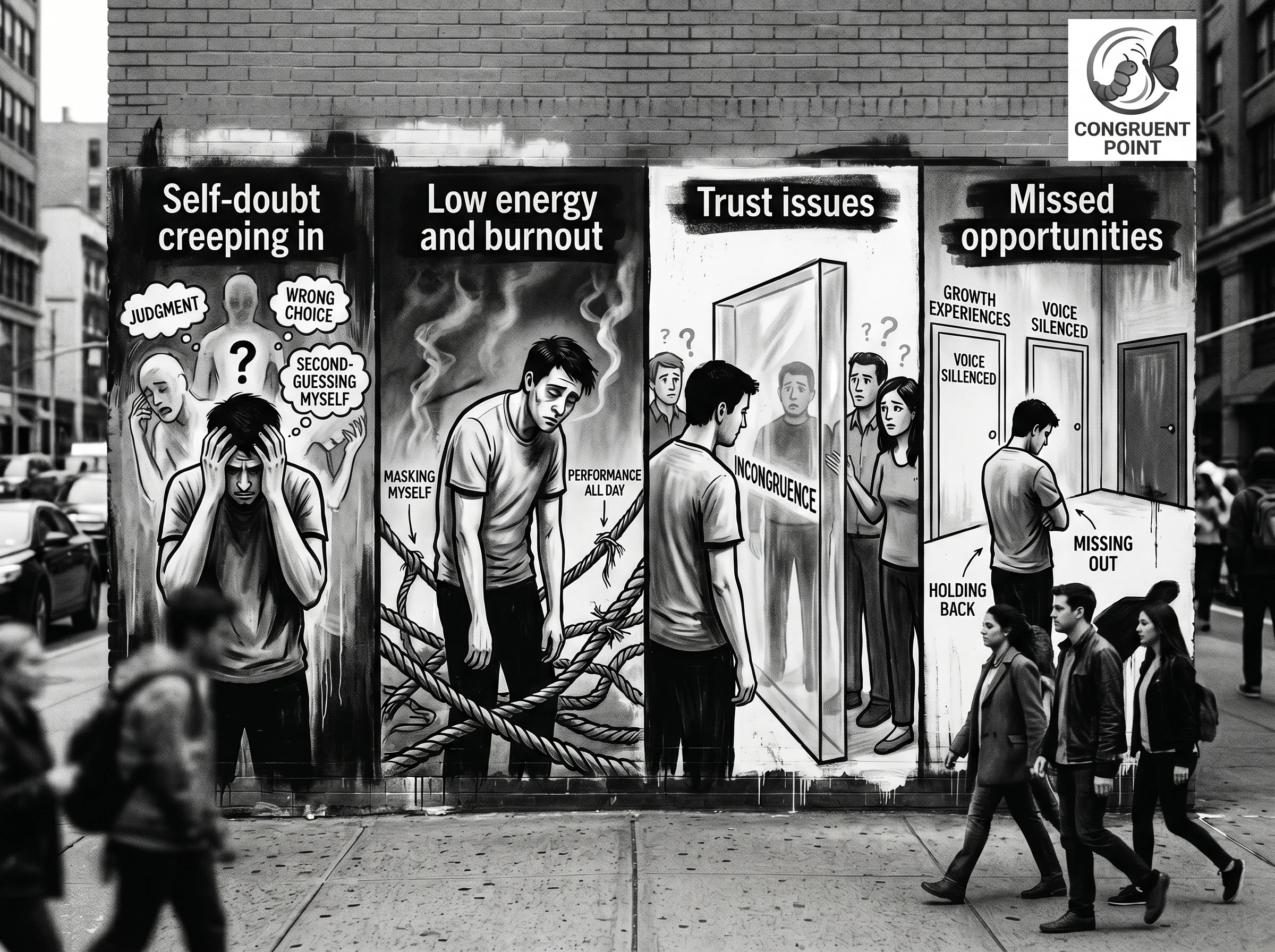
Here’s how that lack of congruence can block my growth:
- Self-doubt creeps in: If I’m acting against my own values or beliefs, I end up second-guessing my choices and judging myself.
- Low energy and burnout: Moving through life while masking what I really think or feel is exhausting. It’s like putting on a performance all day, every day.
- Trust issues: People sense when something’s off, even if they can’t say it clearly. This makes relationships less satisfying and more stressful.
- Missed opportunities: If I keep silencing my own voice or holding back on what matters to me, I end up missing out on experiences that actually help me grow.
Without congruence, I’m pulled in different directions. Any goal I set or habit I try to build becomes ten times harder if the motivation behind it isn’t totally honest. Over time, this can leave you feeling stuck or out of touch with your own wants and needs.
Why Congruence Totally Transforms Personal Growth
Getting all these parts of myself into sync makes every step forward more authentic and enjoyable.
Here’s what congruence brings to the growth table:
- Confidence: When I know I’m showing up as myself, there’s a natural boost. I can make decisions faster and with less stress.
- Resilience: Life can be chaotic, but being congruent means I bounce back more quickly because I’m operating from a stable, real place.
- Deeper relationships: Authenticity draws people in. When I’m congruent, my connections with others get stronger and more meaningful.
- Real progress: It’s easier to set goals I actually care about, follow through on habits, and enjoy growth when I’m not working against myself.
- Inner peace: That uncomfortable tug-of-war feeling fades away, making space for contentment and focus.
Congruence creates a feedback loop.
The more genuine I am, the better I feel, (and look), and the more I want to keep up that honesty in other areas. It’s one of the simplest ways to unlock next-level personal growth. Even when challenges crop up, a congruent approach helps you get back on track more easily.
Simple Signs You’re Out of Alignment
Spotting incongruence takes some awareness.
Here are a few giveaways that something might be out of sync:
- Regularly saying ‘yes’ when you want to say ‘no’: This can lead to resentment or feeling stretched too thin.
- Feeling drained after certain conversations or situations: Pretending to be okay with things drains energy fast.
- Struggling to make decisions: If your values and actions aren’t lining up, every choice starts to feel like a minefield.
- Noticing physical stress signals: Things like headaches or a tight chest might show up when you’re keeping things inside.
- Having different ‘versions’ of yourself: If you act differently at home, work, and with friends, congruence might need some attention.
I’ve definitely found myself people-pleasing or sugarcoating my opinions to avoid conflict, and it always leaves me feeling uneasy. That discomfort is a sign it’s time for some realignment. When small signs like these show up, use them as reminders to check if your actions are matching your values. Honest self-reflection goes a long way.
How to Build Congruence for Better Growth
It’s absolutely possible to get more in sync with yourself, and you don’t need to overhaul your life overnight to start.

Here’s how I approach it:
- Check in regularly: Taking a few minutes daily to ask myself how I’m really feeling, and if my actions match up, helps me spot small misalignments before they grow. Try setting aside a short moment for a self-check each morning or after major events. Over time, these quick check-ins strengthen your self-awareness and prevent bigger issues from sneaking up on you.
- Clarify your values: When I’m clear on what matters most, it’s easier to say yes or no without guilt. Lists, vision boards, or just good old journaling can help clarify values. Reflect on your past experiences—what moments made you proud or uncomfortable? Let those memories guide you as you set clear personal priorities.
- Practice honest communication: Speaking up can feel risky but it gets easier through practice, even if it’s just saying you’re not up for something. Start with people you trust, and gradually practice with tougher conversations. Honest conversations almost always lead to stronger trust and less stress in the long run.
- Let go of perfectionism: Growth doesn’t mean being congruent all the time. Aim for progress, not perfection. If you slip up, just try again next time. Self-kindness makes it easier to bounce back instead of getting stuck in guilt or regret.
- Reflect on feedback: If friends or coworkers point out mixed messages, I treat that as useful info and check where my intentions and actions don’t line up. Use what you learn to strengthen your self-understanding and shift your behavior, rather than taking feedback personally.
Little steps add up over time.
Soon enough, showing up as my real self feels more natural, and I stop carrying the extra weight of pretending. In the end, these small habits help create authenticity as your default mode rather than the exception.
What Happens When You Ignore Congruence?
Living out of alignment can quietly undermine everything else I try to improve in my life.
A few not-so-great ripple effects include:
- Getting stuck in jobs or relationships that clearly aren’t right for me
- Finding it hard to relax or be present in the moment
- Watching personal goals stall out, even when I’m working hard
- Struggling with chronic stress, tension, or even feeling a bit lost
The good news is, spotting these patterns means I still have time to make small corrections.
The earlier I make the change, the easier everything gets. When ignored for too long, misalignment can add up to longer-term unhappiness and missed life opportunities. Staying alert to these warning signs keeps personal growth moving forward.
Everyday Wins: What Better Alignment Brings
Even making small moves toward congruence changes a lot in everyday life.
Here are a few things I notice every time I focus on staying genuine:
- Decision-making is so much less stressful
- I feel excited (instead of nervous) about the future
- Relationships feel honest and safe
- There’s more motivation to reach for new challenges
- I recover faster when things go wrong, because I trust myself to get back on track
That’s why staying congruent is super important for lasting personal growth.
It’s like giving myself a solid foundation, so I can actually build the habits and goals I care about most. And it isn’t just personal—my environment, my work, and the people I care about all benefit when I bring more congruence into the picture. That mutual trust and shared clarity can lead to better teamwork and a stronger sense of community anywhere I go.
Frequently Asked Questions
Below are some questions I hear a lot from people interested in personal growth and congruence:
Question: Can you be too honest or too congruent?
Answer: Honesty is great, but it’s also helpful to be kind and thoughtful. Congruence doesn’t mean saying everything you think, but rather that what you do share is real and true for you. Tact matters! People usually appreciate honesty, but also feel better when it’s paired with kindness. Remember, you can choose your words in a way that respects both yourself and others.
Question: Does congruence mean you never change your mind?
Answer: Not at all. Growing means learning, so it’s normal for thoughts, feelings, or goals to switch up over time. Staying congruent just means you’re honest with yourself and others about those changes. In fact, being able to adapt when you learn new things shows true self-awareness, not a lack of congruence.
Question: What’s a quick way to check if I’m congruent?
Answer: Before making a big choice or commitment, I ask myself: “Does this feel right in both my head and my gut?” If the answer is no, it might be worth digging a bit deeper before moving ahead. Trusting both your logical reasoning and your inner feelings brings clarity to tough decisions.
My Final Thoughts
Congruence isn’t just about being true to yourself.
It’s what actually makes personal growth work over the long term. By getting honest about where I’m aligned (and where I’m faking it), I give myself the best chance to really enjoy the process of becoming who I want to be. The clearer I get, the easier growth feels, and the more satisfied I am with what I build.
For anyone working on themselves, congruence is definitely worth checking out. Start small, pay attention, and let your real self take center stage as you grow.
Thank you for reading my article. Please leave some comments – or questions – and I will be happy to connect.
I really like how practical this article feels. The part about saying “yes” when you actually want to say “no” is so true, because that small habit can quietly drain your energy over time. I also appreciate the reminder that congruence does not mean being perfect, but simply checking in with yourself and making small corrections when something feels off. Do you have a favorite daily question or exercise that helps you notice when you are out of alignment?
Hi Hanna,
I actually do and as simple as it is, it was a hard one to master.
I stop. I talk to myself and I say: “Hold up!” Those seconds (sometimes minutes) help me to check in on my breath, feelings and thoughts. Then, I ask a couple of questions:
Is this worth it to me?
Why has this triggered me?
Once I ground myself like that, it becomes easy to re-centre and walk forward. ????
Thank you for your comments and question. Looking forward to keeping in touch.
A lot of people don’t realize how tiring it is to keep acting against what they really feel, especially with things like saying yes to everyone just to avoid problems. I think congruence is something that slowly affects every part of life, because when your actions and values don’t match, stress builds up without you noticing it at first. The part about having different versions of yourself at work, home, and around friends was really true too, because many people do that without even thinking about it.
Rob, that was indeed my hardest struggle and most rewarding growth point – letting go of all the different versions of myself. That extended to how I dressed, items I bought, the people I felt obligated to accommodate.
I no longer live that way and have found much more depth and purpose to my life.
In essence, I am happier with me. ????
Thank you for taking the time to share your thoughts.
Cassandra